Are you facing back pain that hasn't responded to conservative treatments? If so, you've likely heard the words "spine surgery," which can conjure up images of long scars, painful recoveries, and extended hospital stays.
Fortunately, there's a modern alternative that's transforming the way we approach spinal issues: minimally invasive spine surgery (MISS).
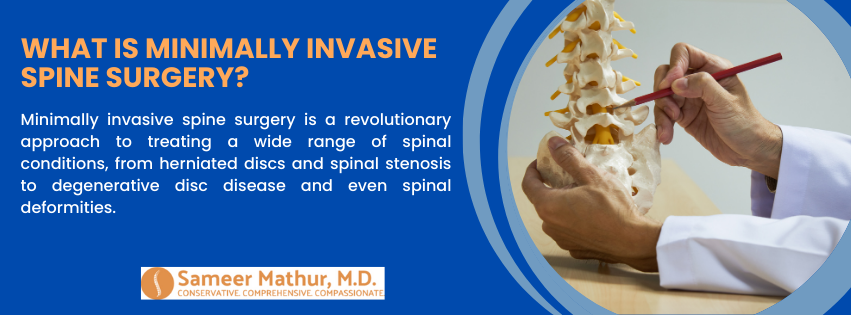
Minimally invasive spine surgery is a revolutionary approach to treating a wide range of spinal conditions, from herniated discs and spinal stenosis to degenerative disc disease and even spinal deformities.
Unlike traditional open surgery, which involves a large incision and significant muscle disruption, minimally invasive procedures use specialized instruments and techniques to access the spine through much smaller incisions.
Here are some common examples of minimally invasive spine procedures:
These are just a few examples of the many minimally invasive spine surgery techniques available. The specific procedure recommended for you will depend on your diagnosis and needs.
It's important to discuss all your options with a qualified spine surgeon to determine the best approach for your situation.
Surgeons performing minimally invasive procedures utilize tiny cameras, specialized tools, and real-time X-ray guidance to navigate through the spine with precision.
Instead of cutting through large swaths of muscle, they gently dilate the tissue, creating a pathway to the problem area. This approach significantly reduces trauma to surrounding tissues and structures.
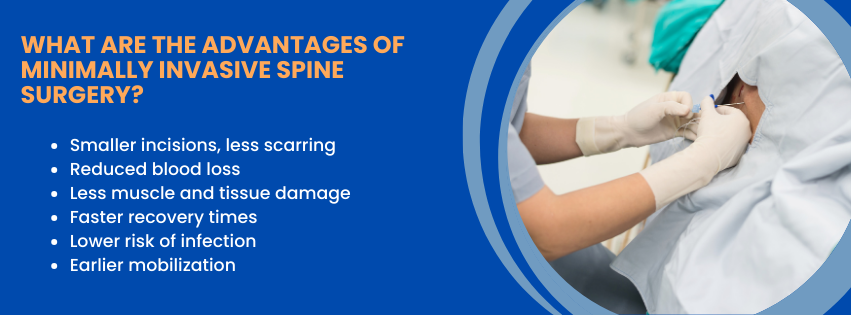
Minimally invasive spine surgery offers several compelling advantages over traditional open surgery:
Minimally invasive spine procedures involve much smaller incisions, typically less than an inch long, compared to the larger incisions of open surgery.
This results in less scarring, a more cosmetically appealing outcome, and potentially less post-operative pain.
The minimally invasive nature of these procedures leads to significantly less blood loss. This reduces the risk of needing blood transfusions and minimizes complications associated with excessive bleeding.
Minimally invasive spine surgery avoids cutting through large muscle areas, minimizing damage to surrounding tissues and structures. This leads to less post-operative pain, faster healing, and a quicker return to normal function.
Patients undergoing such procedures typically recover much faster than those undergoing open surgery. This translates to shorter hospital stays, a quicker return to daily activities, and a sooner resumption of work and other commitments.
Smaller incisions and less tissue disruption mean a reduced risk of infection, which is a crucial factor in any surgical procedure.
Patients can often start moving and walking sooner after a minimally invasive procedure, which aids in recovery and reduces the risk of complications like blood clots.
Recovering from minimally invasive spine surgery is typically smoother than traditional open surgery. However, it's still important to understand the timeline and expectations to ensure a successful healing process.
You'll likely stay in the hospital or medical facility for observation. The focus is on pain management, wound care, and getting you up and moving as soon as possible.
Physical therapy will begin as soon as possible. A physical therapist will help you start gentle exercises to promote blood flow and prevent complications.
Most patients go home within 1-3 days, sometimes even the same day, depending on the procedure and your overall health.
Your orthopedic doctor may recommend a gradual increase in activity during this time. However, you should still avoid strenuous activities or heavy lifting.
You can return to some light activities, like desk work, depending on your recovery and your doctor's recommendations.
Physical therapy remains crucial at this stage for regaining full function and strength. Depending on your job and recovery progress, you may be able to return to work with some modifications or restrictions.
Most patients can resume most of their normal activities, including exercise, by this point. However, it’s essential to continue with physical therapy as needed to address any remaining limitations or weaknesses.
Your surgeon will continue to monitor your progress and adjust your rehabilitation plan as needed.
Most patients achieve full recovery within 6-12 months, although this can vary depending on the individual and the specific procedure.
Maintain a healthy lifestyle with regular exercise and proper posture to support your spine health long-term.
If you're struggling with back pain or a spinal condition, you may be a good candidate for minimally invasive spine surgery. Talk to a qualified spine surgeon who specializes in these techniques. They can assess your needs and guide you toward the best treatment plan for a faster, less painful recovery.
Remember, choosing the proper treatment for your back pain or spinal condition is a crucial step toward regaining your quality of life.
Take the time to gather information, consult with experts, and make an informed decision that empowers you on your path to healing.
When it comes to spine surgery procedures, finding a provider who combines expertise, innovation, and compassionate care is essential.
Dr. Sameer Mathur stands out as the leading specialist in orthopedic spine surgery, offering unparalleled expertise in minimally invasive procedures. These advanced procedures are designed to reduce pain, minimize recovery time, and improve overall outcomes for patients.
Dr. Mathur's extensive training and years of experience make him the top choice for anyone seeking relief from spinal issues.
If you’re looking for the best minimally invasive spine surgery near me, you’re on the right page. Contact us today to schedule a consultation and take the first step towards a pain-free life.
You can also visit our spine specialist in one of our convenient locations near you:
The material contained on this site is for informational purposes only and DOES NOT CONSTITUTE THE PROVIDING OF MEDICAL ADVICE, and is not intended to be a substitute for independent professional medical judgment, advice, diagnosis, or treatment. Always seek the advice of your physician or other qualified healthcare providers with any questions or concerns you may have regarding your health.
Let's work together to find the right solution for your pain. Our board-certified doctors specialize in interventional pain treatments. Find out how we can help.